
A sustainable destination to be preserved for future generations
In Épernay and the surrounding towns, tourism takes into account the challenges of heritage conservation and the green transition.
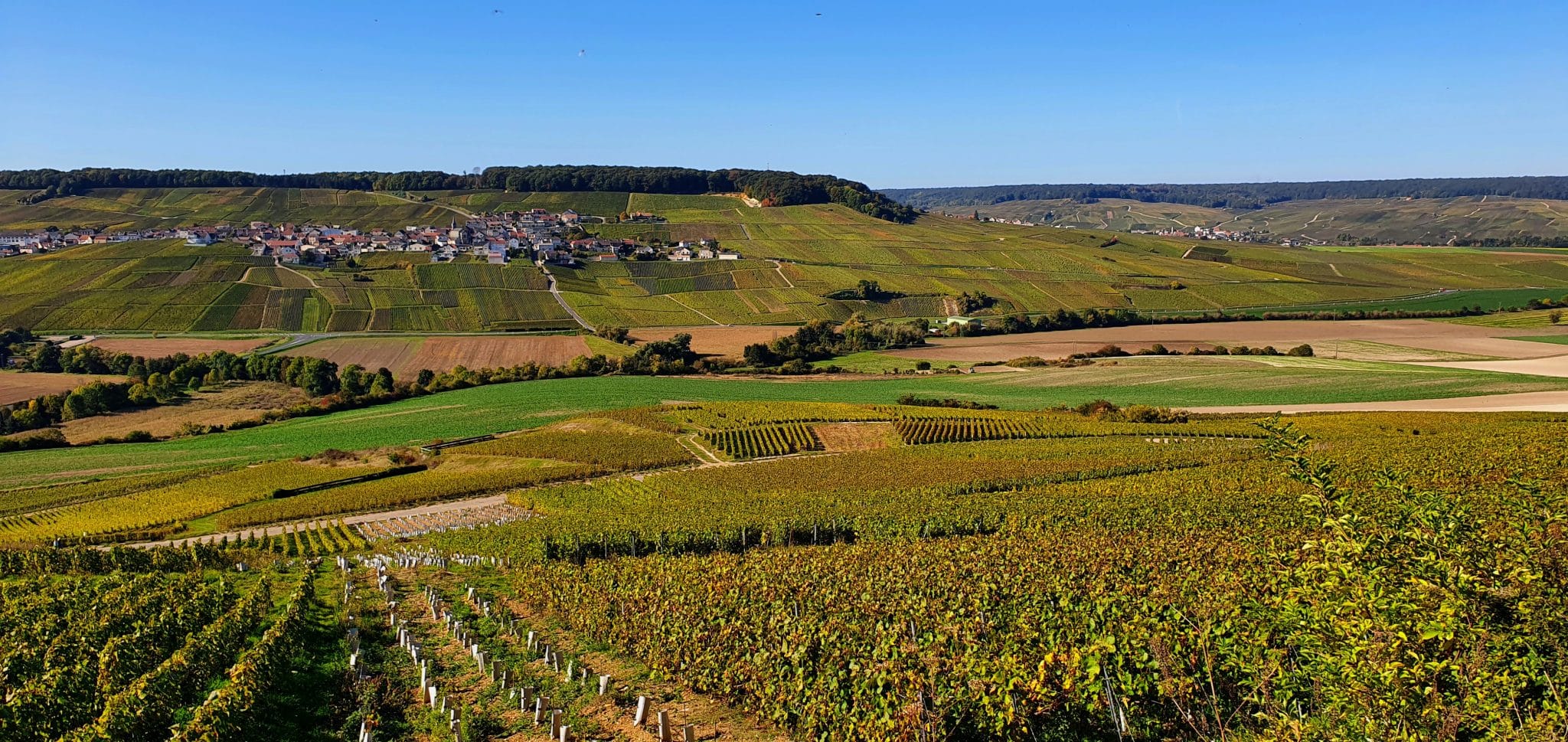
The Epernay en Champagne Tourist Office is situated in the heart of a landscape associated with the Champagne hillsides, houses and cellars, which are listed as a UNESCO World Heritage Site. The area is also situated on the edge of the Montagne de Reims Regional Nature Park. At the inter-municipal level, Épernay Agglo Champagne has a Territorial Climate, Air and Energy Plan, which sets out measures relating to the energy transition and adaptation to climate change.
Against this backdrop, the Tourist Office is integrating eco-responsible tourism into its operations and remit. This involves putting eco-friendly practices into action on a day-to-day basis, as well as raising awareness of eco-responsible practices amongst tourism professionals and visitors.

UNESCO World Heritage
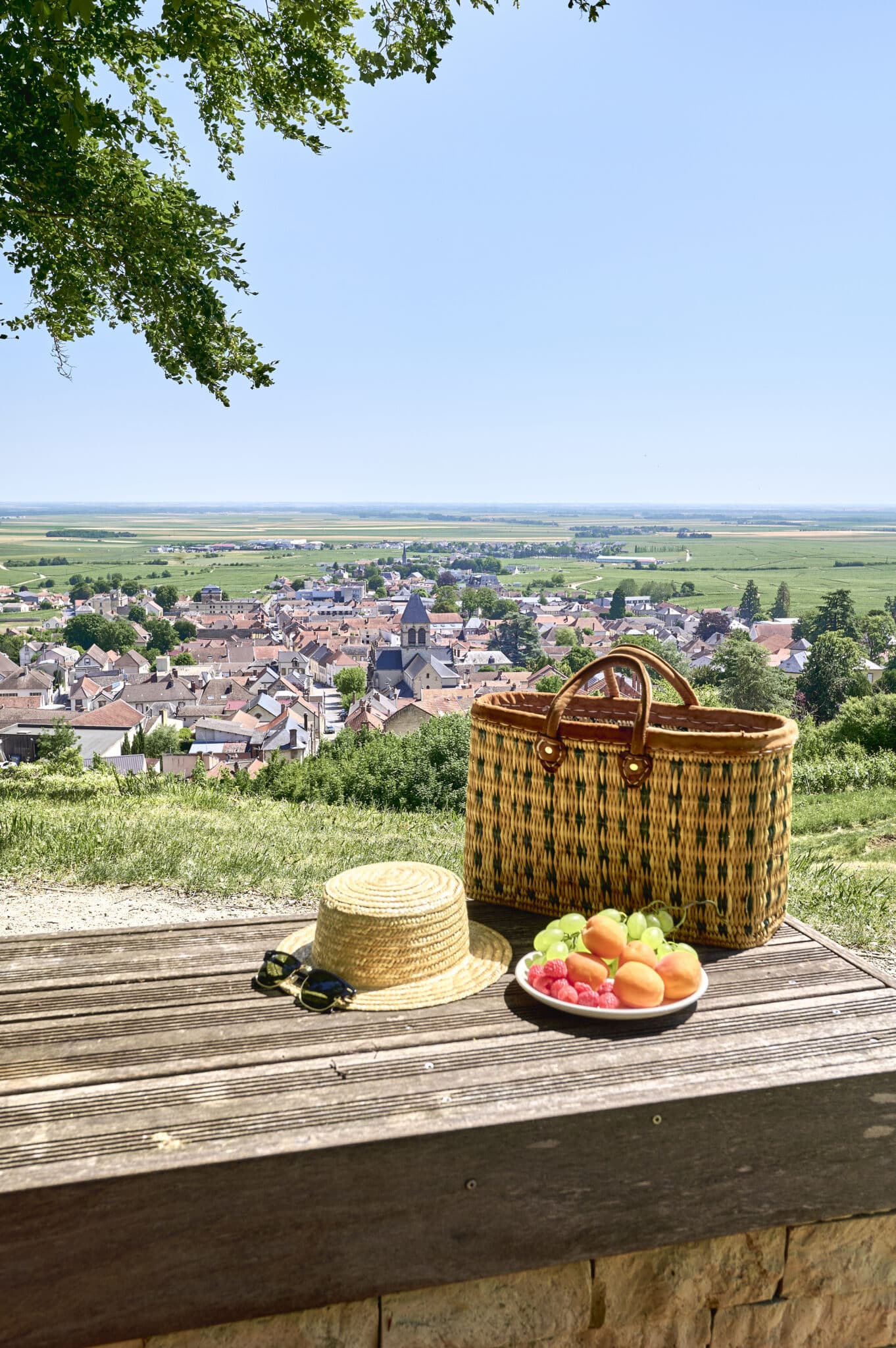
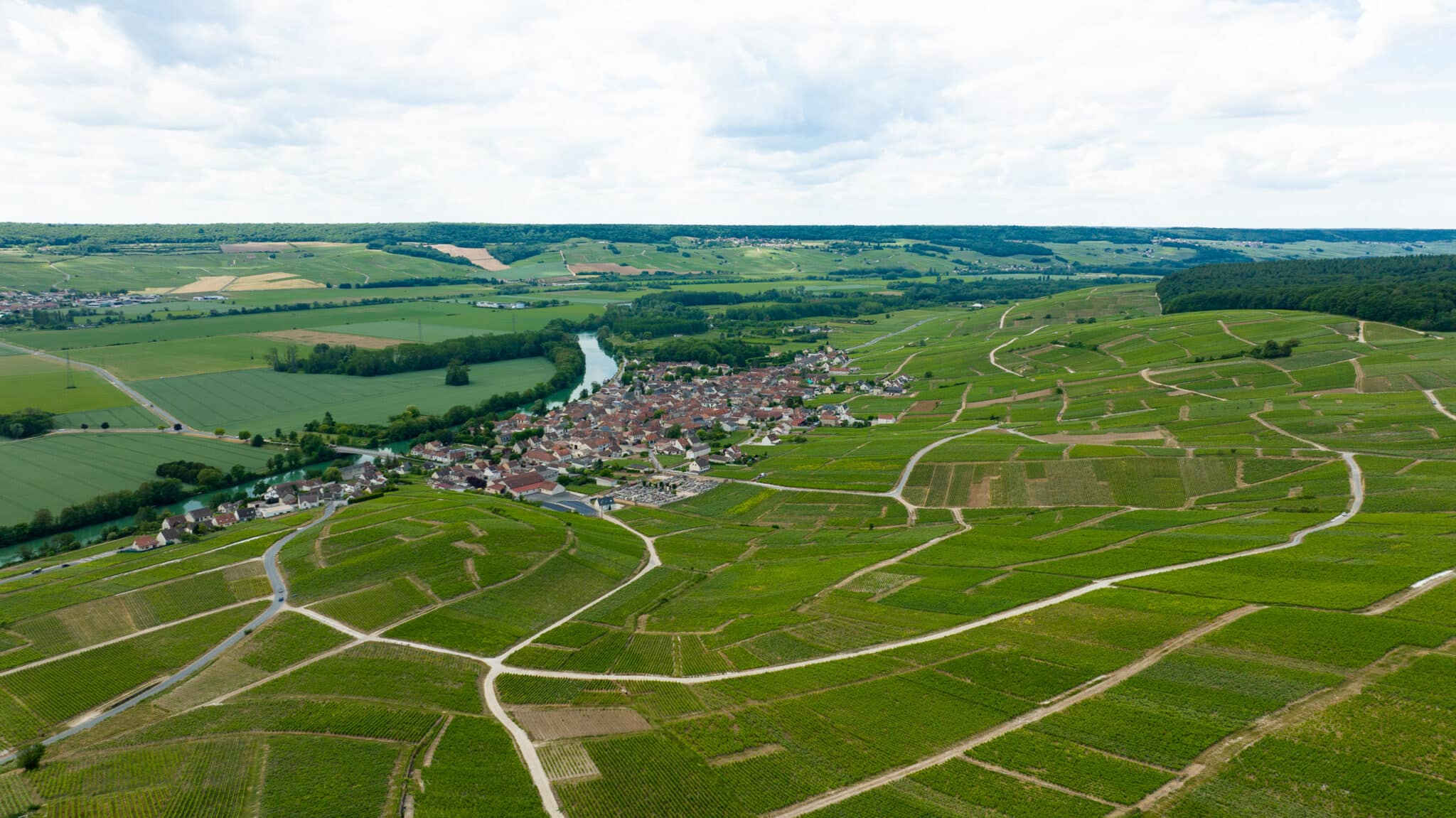
The Champagne Hillsides, Houses and Cellars are inscribed on the UNESCO World Heritage List for their Outstanding Universal Value as a living, evolving cultural landscape.
The entire Champagne Appellation d’Origine Contrôlée (AOC) area – comprising more than 300 villages spread across five departments and three regions – constitutes the ‘zone d’engagement’ (commitment zone), a coherent geographical and historical whole in which local communities, the wine industry and other stakeholders undertake, on a voluntary basis, to preserve and enhance the landscape and heritage.
The Champagne Hillsides, Houses and Cellars are the result of expertise honed over generations, exemplary inter-professional organisation and the protection of the appellation – which it is our responsibility to preserve for future generations.
As an ambassador for the “Ma Champagne au Patrimoine mondial” initiative, the Tourist Office invites walkers and cyclists to respect the flora and the work of the winegrowers during their outings in the vineyards by using the paths that run around the plots and avoiding walking between the rows.
Every autumn, the Champagne Hillsides, Houses and Cellars World Heritage Initiative organises the ‘Clean Villages and Slopes’ campaign to preserve the visual quality of the countryside and the health of the soil.

Protected natural areas
The Tourist Office provides visitors with a map for exploring the Saint-Gond Marshes Special Area of Conservation, which is also a Natura 2000 site, as well as a walking map featuring two routes (loops 120 and 121) that allow visitors to discover the marshes’ natural and architectural heritage. This is an area that must be preserved, both for its biodiversity and for its role as a water resource (feeding the Petit Morin, safeguarding drinking water catchments and maintaining wetlands). However, in recent years, the area covered by the marshes has declined significantly. Given the site’s ecological characteristics and functions, the main challenges therefore concern the conservation of natural habitats and the sustainable management of water resources. It is therefore essential that visitors are made aware of the fragility of the environment in order to preserve it.
A map featuring 17 circular walking routes takes walkers through or past protected atural areas, which is why Epernay Agglo Champagne has drawn up a walker’s charter to ensure that this natural heritage is preserved.
If you choose the 117 or 141 loops, you’ll be able to admire the Roualles cliffs and the former pastures of Cuis, which have been designated a nature reserve since 1931 due to their rich flora and fauna, with over 100 animal species recorded. Please note that, because of this designation, the cliffs may not be climbed, unlike the Falloises de Vertus.
As you follow the 140 loop, you will pass close to the underground quarries at Vertus, which are designated as a Natura 2000 site and provide a key habitat for the notched-eared bat, a species that hibernates for up to seven months in winter. An information board provides valuable details about this species; however, access to the interior of the caves is not permitted.
The Pâtis d’Oger and Mesnil-sur-Oger Nature Reserve is a national nature reserve and a Natura 2000 site. It is home to an extensive network of ponds where common animal species such as the kingfisher and protected species such as the crested newt thrive. You might be lucky enough to spot some of them whilst following loops 130 and 133.
Gardens and green spaces just a stone’s throw from the Tourist Office
Epernay is home to two remarkable gardens that are easily accessible on foot from the station or the town centre.
The Town Hall garden, situated at 7 bis Avenue de Champagne, features a section laid out as a French-style garden to offer visitors arriving from the station a fine view of the Town Hall’s façade. The second part of the park is laid out in the English landscape style: visitors can stroll along the paths that wind their way between the trees, passing by a waterfall or through the Temple of Love. The park is open to visitors all year round. The Tourist Office benefits from this idyllic setting, with a side door in the reception area providing access to the park.
The Horticulture Garden is linked to the town centre by a green corridor. A true haven of greenery accessible from Rue du Comte Lambertye, it is home to remarkable species such as a Verzy oak, a sequoia and a bald cypress, and is crossed by the Cubry stream. Events for all ages take place throughout the year.
Le Jard, the redevelopment of which was inaugurated in 2026, is a genuine urban park just a stone’s throw from the town centre. This green space is a place for strolling and relaxing: paths, lawns and shaded areas are accessible at all times. The reflecting pool and the mist maze are particularly popular on hot days, and for those wishing to soak up the sun, sun loungers and benches are available for visitors to rest on. For those who enjoy picnics, there are no fewer than five tables available; with shops just a short walk away, it’s easy to organise a packed lunch.
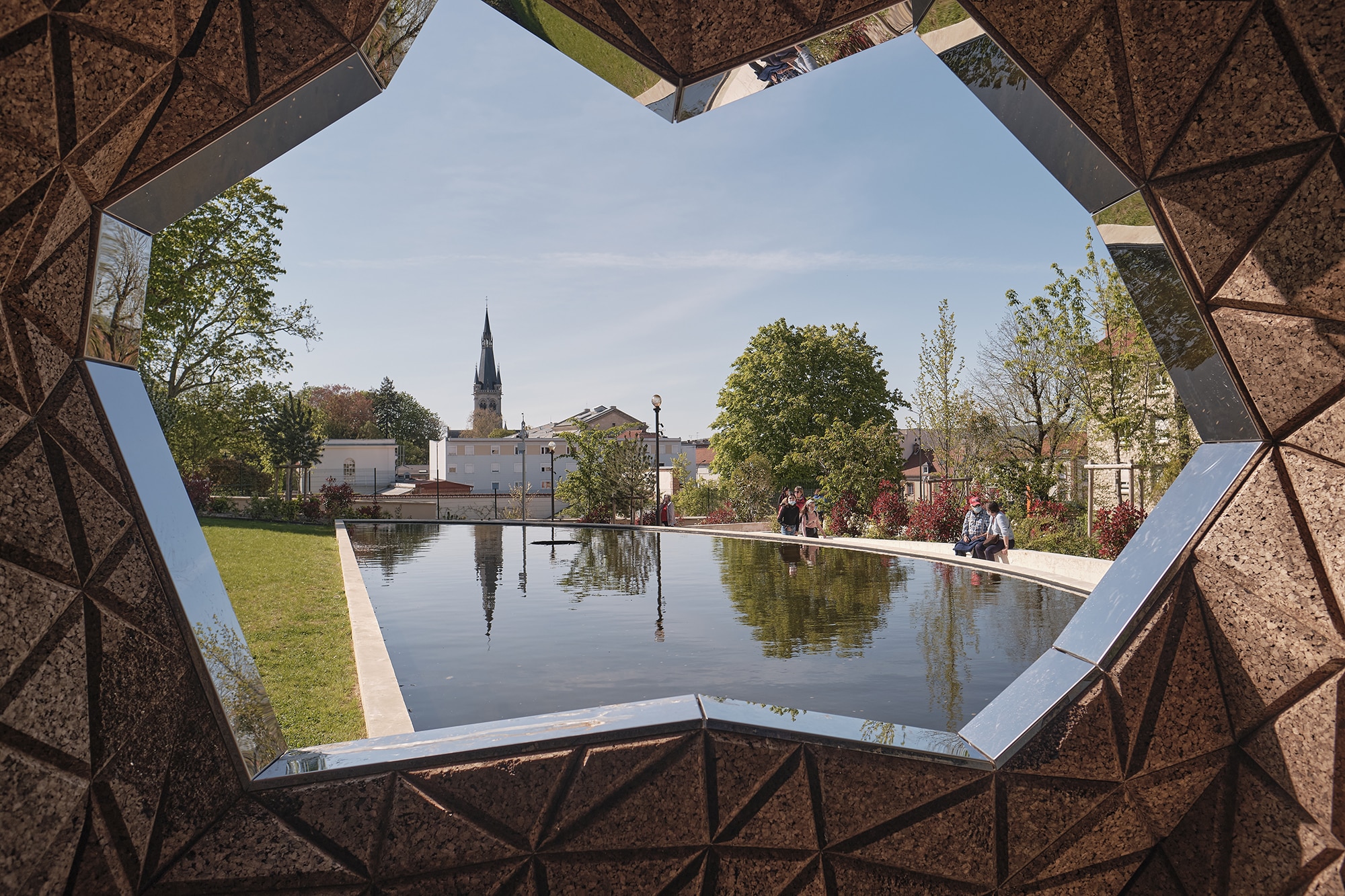
The museum garden, situated on Avenue de Champagne, provides a stunning setting for Château Perrier, which now houses the Museum of Champagne Wine and Regional Archaeology. The park is open all year round, even outside the museum’s opening hours, but remains closed at night. With its pond, mirror sculpture and winding paths, it is a place that reveals itself as you stroll through it and holds plenty of surprises. The garden hosts events as well as a land art installation as part of the Vign’Art festival, which takes place from May to September.
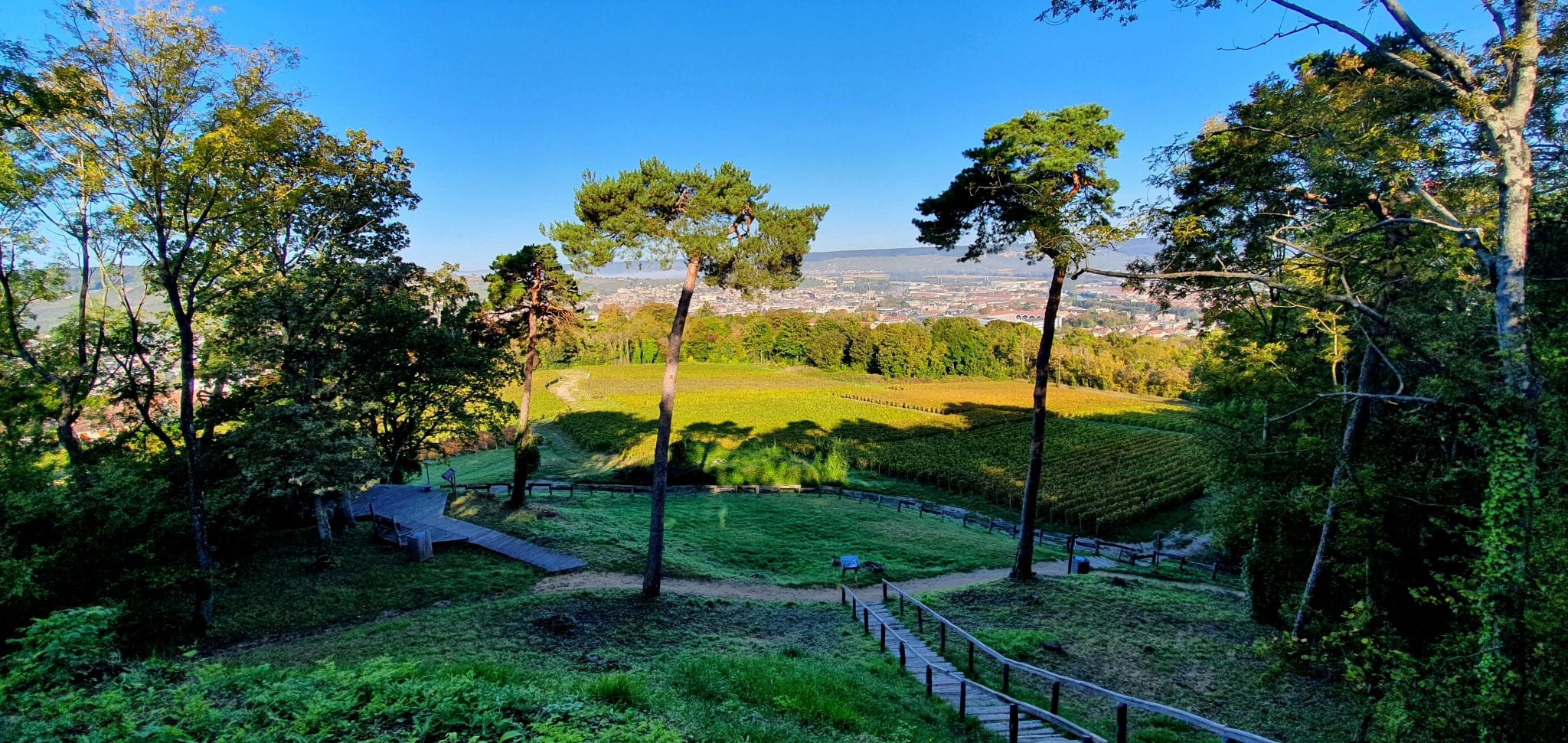
The Mont Bernon in Epernay
Mont Bernon rises to a height of 207 metres and offers breathtaking views of the historic hillsides and the Côte des Blancs, as well as the Châlons-en-Champagne plain. Listed as a natural monument, it can be reached on foot, by bus (line 1), or by bike for those who enjoy a challenge.
The Tourist Office offers a ‘Bulle Verte’ experience linking Avenue de Champagne to Mont Bernon: a guided walking tour that you can follow at your own pace and independently using your smartphone. You can scan the QR code at the Tourist Office reception.

Nature Discovery Sites & Vineyard Gardens
Around Epernay, you can also enjoy the countryside and discover the unique features of the Champagne landscape by stopping off and taking a stroll through a vineyard garden or a nature discovery site.
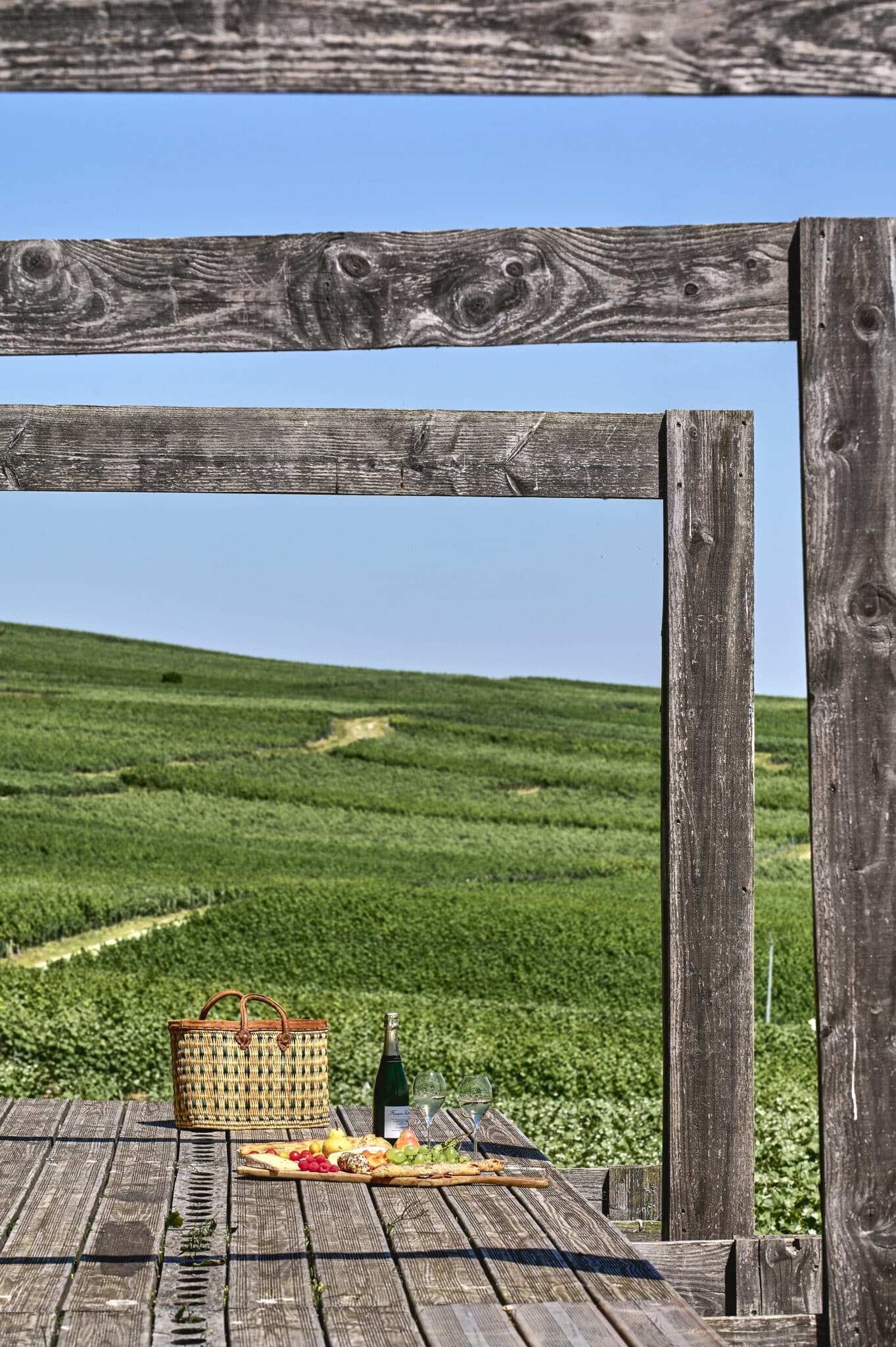
These areas have been designed so that you can have a picnic, go for a walk, learn about the life cycle of the vine, and where the little ones can burn off some energy on the play equipment.
Five nature discovery sites, accessible to people with reduced mobility, explore different themes and offer a variety of viewpoints:
- Parc Vix in Avize is a water-themed walking area featuring information boards designed for families and people with visual impairments; visitors can also try their hand at playing music using the outdoor musical instruments;
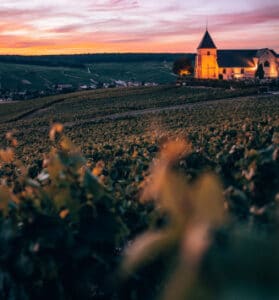
- The Chouilly Wetland Garden, overlooked by the village church, is an interpretive trail featuring information boards on the local flora and fauna; it can be explored on foot or by bike and even has a barbecue area by the river;
- The Jardin de l’Hors du Rû in Pierry is divided into two parts: the first is a garden featuring arbours, pergolas and a gazebo, whilst the second is a woodland area planted with century-old trees;
- The Gué du pré salé in Plivot is a floodplain where you can admire the water features from a wooden jetty;
- The ‘Sept Clochers’ viewpoint in Toulon-la-Montagne takes its name from the panoramic view of the churches in the seven surrounding villages and focuses on biodiversity, notably featuring fruit trees from which walkers can pick apples and pears.
Seven vineyard gardens, which are effectively open-air museums, explore the theme of the vineyard from various angles: sensory, artistic and, of course, educational:
- In Chouilly, this vineyard garden was the first to be created and illustrates the domestication of the vine through the ages; children can test their knowledge with a quiz;
- The Cramant Lookout offers a panoramic view of the Champagne vineyards, which is explained via information boards and a map; it also features a vineyard hut;
- In Cumières, along the Marne, Eric Sléziak’s sculptures depict the work carried out in the vineyard through eight scenes, from pruning to disgorging;
- Mont Bernon, the highest point in Épernay, offers a 360° panoramic view, notably of the historic vineyards listed on the UNESCO World Heritage List;
- Le Clos Saint-Vincent in Mesnil-sur-Oger offers an original way to discover the three grape varieties through an olfactory experience in the Aromatherapy Garden; you’ll also be delighted by the Walk of Fame dedicated to local winegrowers;
- Le Balcon sur la Champagne, Jardin des Demoiselles in Monthelon, has been designed as a welcoming space featuring a long picnic table and a tasting table; it also offers exceptional panoramic views of the hillsides and villages, as well as a limestone cliff;
- The ‘Au cœur des coteaux’ trail in Vinay is a vineyard garden comprising several stages spread over 4 km, which introduces you to the plants used by winegrowers to guide the vines before the invention of wire.
The Tourist Office is committed to its work every day
Our approach to environmental responsibility is part of a process of continuous improvement. For several years now, this has taken the form of concrete, measurable and evolving initiatives designed to meet the expectations of our visitors, our partners, our staff and all our stakeholders.
In December 2023, the Tourist Office launched the 7 green challenges:
- Waste sorting
- Using water flasks rather than plastic water bottles
- Reducing energy consumption
- Recycling and reusing equipment
- Optimising business travel (carpooling)
- Reducing the carbon footprint (optimised emails, video conferencing, remote working)
- Showcasing local products in the shop.
The Tourist Office works to preserve natural resources by optimising the print run of its publications through an annual review of requirements based on stock levels, and by choosing suppliers committed to an environmentally responsible approach.
The communications agency has set up the Vert-veine green lab, which supports its clients who are concerned about the future of the planet by designing campaigns using recycled materials, promoting environmentally friendly products and installing energy-efficient servers.
The printer is a company located less than 30 km away and holds the Imprim’Vert certification. It uses vegetable-based inks and FSC- and PEFC-certified paper, and ensures that waste is disposed of in an environmentally responsible manner (recycling, sorting, and specialised disposal channels for toxic waste).
# Gourdefriendly
Switching to a reusable water bottle is a simple way to reduce plastic waste whilst staying well hydrated when you’re out and about.
To help you with this, the Tourist Office has put together a list of drinking water points and ‘#GourdeFriendly’ partner establishments across all 47 local municipalities.
Whether you’re out and about on foot, by bike or visiting the vineyards, you’ll easily be able to find places where you can top up your water bottle for free and enjoy your stay in a more environmentally responsible way.
Pop into the Tourist Office, which is a ‘refreshment point’ and a ‘#Gourdefriendly’ ambassador. Our staff are on hand to fill up your water bottle.
Ecoboussole
The Grand Est Regional Tourism Agency offers a scheme called Ecoboussole and a highly effective support service, the aim of which is to provide tourism operators with a simple, free solution to assess their potential for progress and identify areas for improvement in their practices, with a focus on sustainability.
The Epernay en Champagne Tourist Office is committed to taking a leading and unifying role in sustainable tourism and aims to provide its partners with the best possible support.
Promoting ‘green nudges’
We’re all familiar with eco-friendly practices, but sometimes we forget to put them into action. To remind people of the basic ways to save water and energy, the Tourist Office and the Marne Tourism Development Agency will be offering service providers ‘green nudges’ in the form of stickers to put on light switches and taps, as well as signs with recommendations on how to adjust the heating or air conditioning.
With its humorous messages and eye-catching design that immediately grabs your attention, the nudge encourages without being pushy.
A Region Committed to the Green Transition
The Tourist Office is fully aligned with the Epernay Agglo Champagne Strategy through the ‘Territory Committed to Ecological Transition’ Programme – Climate, Air and Energy 2-Star Label – 2024 to 2027, which includes an action plan covering the development of the local economy, the decarbonisation of industry, sustainable tourist mobility, support for responsible businesses and tourism, transport, and the promotion of regional synergies, in which the Tourist Office is a key stakeholder.