

Two Destinations, Two Stories — and Countless Things in Common
Burgundy and Champagne are the two French wine regions inscribed on the UNESCO World Heritage List, and they sit less than three hours apart by train. Most travelers visit them separately. This itinerary links them into one trip: eight days from Paris, by train for the long-distance legs and by private driver for the countryside stretch — with no need to drive yourself, ever.
Both regions share centuries of winemaking craft and an unusually deep sense of place. Burgundy is built around historic terroirs and single-vineyard wines, each named for the exact plot of land it comes from. Champagne is built around its cellars and iconic Maisons, custodians of a wine born and refined on this landscape for centuries. Each is exceptional in its own right, and together they tell the fuller story of French wine.
In 2025, both regions marked ten years since their inscription on the UNESCO World Heritage List: the Coteaux, Maisons et Caves de Champagne, as well as the Climats du vignoble de Bourgogne, have been listed since July 4, 2015.

Getting There & Around
This itinerary combines direct TGV connections between Paris, Dijon, Reims and Epernay with a private driver for the countryside stretch between Beaune, Vézelay, Fontenay and Troyes, where no direct train line exists. These distances, which may look like a lot on a map of France, are short by American standards: the longest single leg of this stretch is under two hours by road.
- Paris Gare de Lyon → Dijon: about 1h40 by direct TGV.
- Beaune → Vézelay → Fontenay → Troyes → Epernay: by private driver (about 300 km in total for this stretch) — no direct train line covers this route.
- Epernay → Reims : a short regional train (about 25 minutes) or private driver; then Reims / Epernay → Paris Gare de l’Est: under 1h30 by direct TGV.
- Epernay / Champagne-Ardenne TGV station → Paris Charles de Gaulle Airport: about 35 minutes.
The 8 - Day Itinerary
Day 1 — Paris to Dijon
Direct TGV from Paris to Dijon, former capital of the Dukes of Burgundy, in about 1h40. Use the rest of the day to settle in and explore the streets around your hotel before the itinerary begins in earnest tomorrow.
Day 2 — Dijon
Dijon, capital of Burgundy, gateway to the Climats du vignoble de Bourgogne du vignoble de Bourgogne — a set of precisely delimited vineyard parcels, passed down through generations, that embody the historic model of Burgundy’s terroir winemaking and are inscribed on the UNESCO World Heritage List.
Discover a wide range of oenological activities, such as vineyard tours and wine tastings, to explore this unique viticultural heritage and the excellence of its terroirs.
Proud of its 97-hectare protected area, one of the largest of its kind in France, Dijon’s city center is recognized by UNESCO as a “property of universal value.”
It offers visitors a rare quality of discovery. Without cars, and without olfactory, visual or sound pollution, the historic center offers the pleasure of strolling freely and at leisure.
Dijon alone brings together every ingredient for an exceptional epicurean stay. No wonder Dijon has been selected as the gateway to the World Valley of Gastronomy, a 620 km gourmet route linking Dijon to Marseille: with six Michelin-starred chefs, gastronomic and bistronomic restaurants, and countless local specialties (jambon persillé, gingerbread, snails, crème de cassis, gougères…), Dijon is a leader in gourmet food, good eating and drinking.
The International Cité of Gastronomy and Wine celebrates and brings to life the UNESCO-recognized values of the Repas Gastronomique des Français and the Climats du vignoble de Bourgogne. Immerse yourself in the French art of living with exhibitions, tastings and workshops — an unforgettable sensory experience


Capital of Burgundy Wine
Day 3 — Route des Grands Crus and Beaune
The Route des Grands Crus runs from Dijon to Santenay through villages that define Burgundy wine: Chablis, Pommard, Meursault, Saint-Véran, among the 33 Grands Crus within Burgundy’s 100 appellations. Romanée-Conti, widely considered the world’s most prestigious wine, is produced along this road. Burgundy’s vineyards are planted almost entirely with two grapes, Chardonnay and Pinot Noir.
There are several ways to experience the route, depending on pace and style:
- A guided cycling tour through the Climats.
- A vintage 2CV tour through the villages.
- A drive in a vintage Morgan roadster.
- A small-plane flight or hot-air balloon ride over the vineyards, followed by a market-menu lunch.
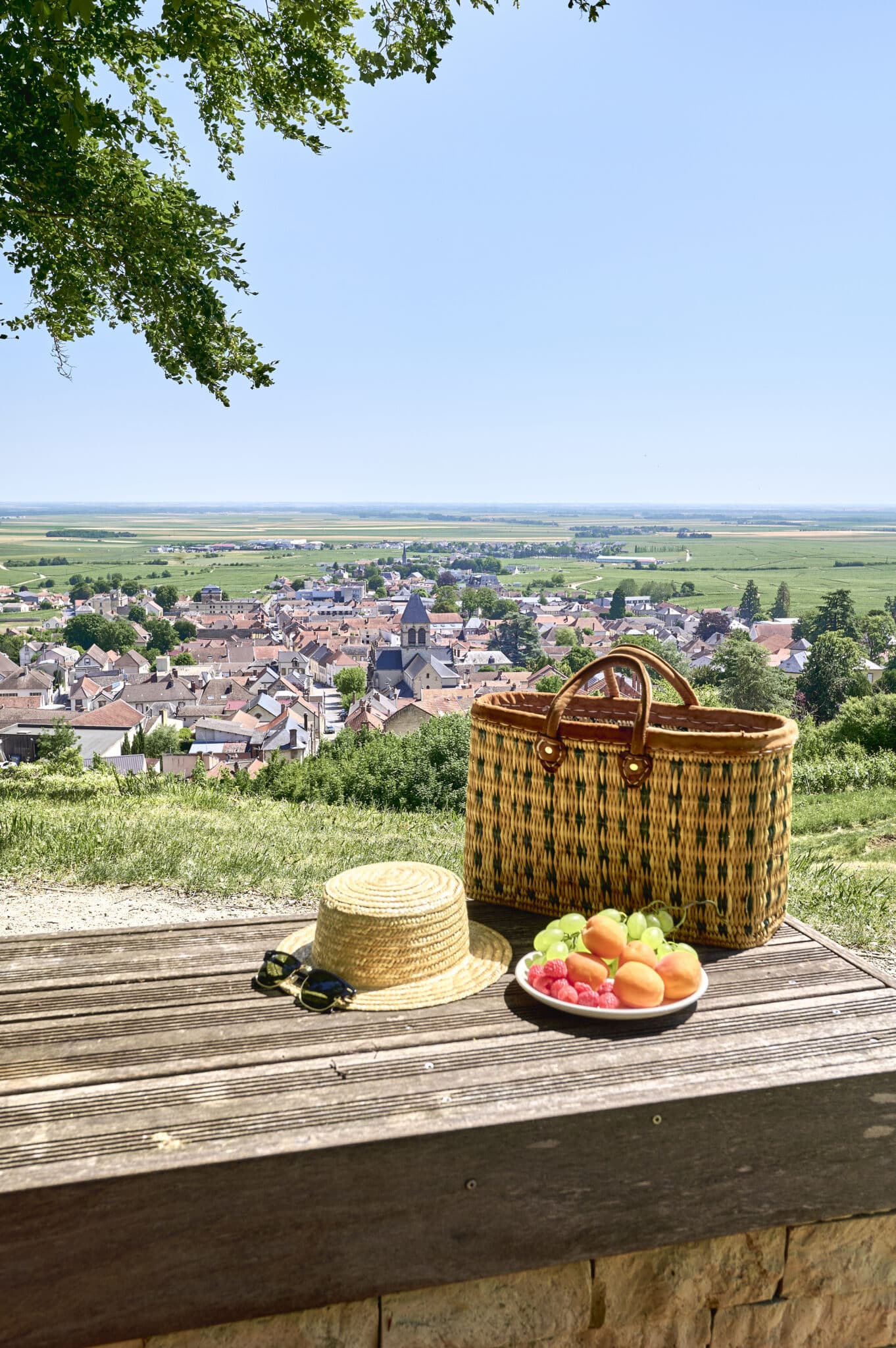
- A countryside picnic set up directly among the vines.
An exceptional cultural heritage: discover exceptional cultural heritage by visiting the world-famous Hospices de Beaune.
Century-old wine cellars: enjoy wine tastings in the heart of Beaune, in cellars like Caves Patriarche or Maison Champy.
Overnight at the Hostellerie Cèdre & Spa, facing the ramparts near the Hospices (see the “Where to Stay” section for full details) — you’ll spend two nights here, the second following tomorrow’s excursion to Vézelay and Fontenay.

Day 4 — Vézelay and the Abbaye de Fontenay
A quieter day, built around two sites inscribed on the UNESCO World Heritage List.
The Vézelay hill, its village and its basilica are inscribed on the UNESCO World Heritage List. Vézelay has welcomed pilgrims for centuries, and the village itself is well worth the detour, for the atmosphere and charm typical of the finest French villages. Its Basilica of Sainte Marie-Madeleine is a true masterpiece of Romanesque art, beautifully restored.
Nearby, the Abbaye de Fontenay, also inscribed on the UNESCO World Heritage List, is a Cistercian abbey in the heart of the unspoilt Auxois countryside, combining the beauty of Romanesque buildings with its gardens. Vézelay and Fontenay are visited by private driver from Beaune, where you’ll return for a second night.
Day 5 — On to the City of Troyes
A private driver takes you directly from Beaune to Troyes; no direct train line connects the two towns. Head north to Troyes. Its historic center, laid out in the shape of a Champagne cork, blends medieval and Renaissance heritage: an extraordinary collection of timber-framed houses, typical cobbled streets, nine churches and one cathedral.
Troyes is also a city of art: a “beautiful 16th century” collection of sculptures, and an extraordinary collection of painted stained-glass windows — the largest and most stunning collection in Europe. Among its nine museums: the Cité du Vitrail, an interpretation center offering a journey to the heart of stained glass, from the Middle Ages to the present day; a modern art museum focused on the fauvist and expressionist movements, with 2,000 works by artists including Matisse, Dufy, Modigliani, Picasso and Cézanne; and the Tools and Trade Museum, exhibiting more than 12,000 tools from the 17th to the 19th century.
On the food and drink side, Troyes is known for its specialties: Prunelle de Troyes, Champagne, Rosé des Riceys, andouillette de Troyes and Chaource cheese, as well as its renowned pastry and chocolate makers (Meilleurs Ouvriers de France, world pastry champions…). The Montgueux vineyards overlook the city just 10 km away, with the Champagne route of the Côte des Bar 30 minutes to the southeast.
Troyes is also a capital of shopping: birthplace of brands including Petit Bateau, Lacoste and Le Coq Sportif, with more than 250 outlet shops and 400 brands, and discounts of 30 to 70%. The McArthurGlen centre, open seven days a week, welcomes four million visitors a year and offers a tax-refund desk for non-European travelers.
Troyes is also the birthplace of Rashi, the great commentator on the Hebrew Bible and the Talmud, born here in 1040. The Maison Rashi — which houses the synagogue and its remarkable glass roof, a library, exhibition rooms recounting his works and history, and a reconstruction of a medieval oratory and beth hamidrash (study room) — offers visits for groups or individuals (2 hours), by booking (48 hours in advance).
Continue on to Epernay by private driver (about 2 hours by road), arriving by evening. Travelers who prefer to split the drive in two can break the journey with an overnight stay in Troyes — see “Where to Stay” for two 5-star addresses in the historic center.


Day 6 — The Prestigious Avenue de Champagne
The Avenue de Champagne sits atop roughly 110 kilometers of cellars holding around 200 million bottles — the “Champs-Élysées” of Champagne. Stroll, visit, taste, then extend the experience over a meal or an overnight stay.
Admire the statue of Dom Pierre Pérignon, set in the courtyard of the Moët & Chandon house, then discover the history of Champagne at the Musée du vin de Champagne et d’Archéologie régionale, housed in the Château Perrier on the avenue, opposite the Cellier Belle Époque of the Perrier-Jouët house.
Don’t hesitate to visit the Maisons along the prestigious Avenue de Champagne — book ahead of your visit.
The following morning, follow the cycling routes that wind through hillsides, vineyards, forests and charming villages typical of Champagne, for a journey through the region’s natural and wine-growing heritage.
Overnight at the Royal Champagne Hotel & Spa, in Champillon, or at the Hostellerie de la Briqueterie, in Vinay — both a few minutes from Epernay, reachable by taxi (see the taxi routes available through Epernay Tourism’s partner service).
Day 7 — Reims
Reach Reims from Epernay by regional train (about 25 minutes) or private driver. Visit Reims Cathedral, where French kings were once crowned, then spend the afternoon touring Champagne Maisons — Taittinger, Pommery, Ruinart, Veuve Clicquot, Krug, among many others — several of which are open only by private appointment.
Day 8 — Reims to Paris
Return to Paris via the Champagne-Ardenne TGV station, about 35 minutes from Paris Charles de Gaulle Airport — a practical option for travelers connecting to an international flight.

Two Hotel Pairings, Plus a Stop in Troyes
Both legs of this itinerary can each be anchored by a hotel belonging to the same group as its counterpart in the other region — a way for the experience to carry on naturally, from Burgundy to Champagne.


Champagne Hospitality
- Royal Champagne Hotel & Spa (Champillon, near Epernay): 5 stars, 47 rooms, panoramic views over the vineyards and Epernay. A Michelin-starred restaurant, Le Royal, as well as the restaurant Le Bellevue, and a spa with views over the vineyards.
- Its Burgundy sister property, Château la Commaraine (Pommard): 5 stars, a Hotel, Spa & Cuverie built around its own Premier Cru vineyard, at the heart of a 12th-century château. Both restaurants are overseen by the same chef, Christophe Raoux, Meilleur Ouvrier de France — the same craftsmanship, from one region to the other.


Beauvallon Collection
- Hostellerie Cèdre & Spa (Beaune): under the direction of Chef Jordan Billan, a Michelin-starred restaurant, Le Cèdre, as well as the restaurant Table Gourmande, and a Nuxe spa set in a vaulted stone cellar.
- Its Champagne counterpart, the Hostellerie de la Briqueterie (Vinay, near Epernay): a four-hectare country house entrusted to Chef Nawal Rezagui, with a Michelin-starred restaurant, Alcôve, as well as the restaurant Bistrot, and the Maison Caulières Spa.
Both properties share the same “maison de famille” approach to service: here too, the itinerary simply carries on, from Burgundy to Champagne.
Quick Facts
- Getting around: by train for the long-distance legs (Paris ↔ Dijon, Reims/Epernay ↔ Paris), complemented by a private driver for the countryside stretch between Beaune, Vézelay, Fontenay and Troyes — no self-drive car is needed.
- Best Time to Visit: This itinerary can be enjoyed throughout the year, with each season offering a different perspective on Burgundy and Champagne. Spring brings fresh green vineyards and mild weather, while summer is perfect for outdoor experiences, vineyard terraces and lively wine villages. Autumn is particularly popular thanks to the grape harvest and the spectacular colours of the vineyards. If you’re travelling in October, don’t miss the opportunity to take part in the famous Champagne Day, a worldwide celebration dedicated to Champagne, with special events, tastings and experiences taking place across the region. In mid-November, the famous Hospices de Beaune Wine Auction adds a unique cultural and wine experience to the journey. Whatever the season, booking Champagne House visits, winery experiences and restaurants well in advance is highly recommended, especially during peak travel periods.
- The grapes: Burgundy is almost entirely Pinot Noir and Chardonnay, bottled as single-varietal wines; Champagne blends Pinot Noir, Chardonnay and Meunier.
- The Route des Grands Crus: 100 appellations, 33 Grands Crus, from Dijon to Santenay.
- UNESCO status: both the Climats du vignoble de Bourgogne and the Coteaux, Maisons et Caves de Champagne have been inscribed on the UNESCO World Heritage List since July 4, 2015.
- Style: designed as a small-group or private itinerary, appointment-driven rather than a self-guided wine trail.
This guide is designed to be handed directly to a travel advisor or published as-is: every stop, train time and overnight option is ready to book.
